How To Tell if Furniture is Antique or Reproduction
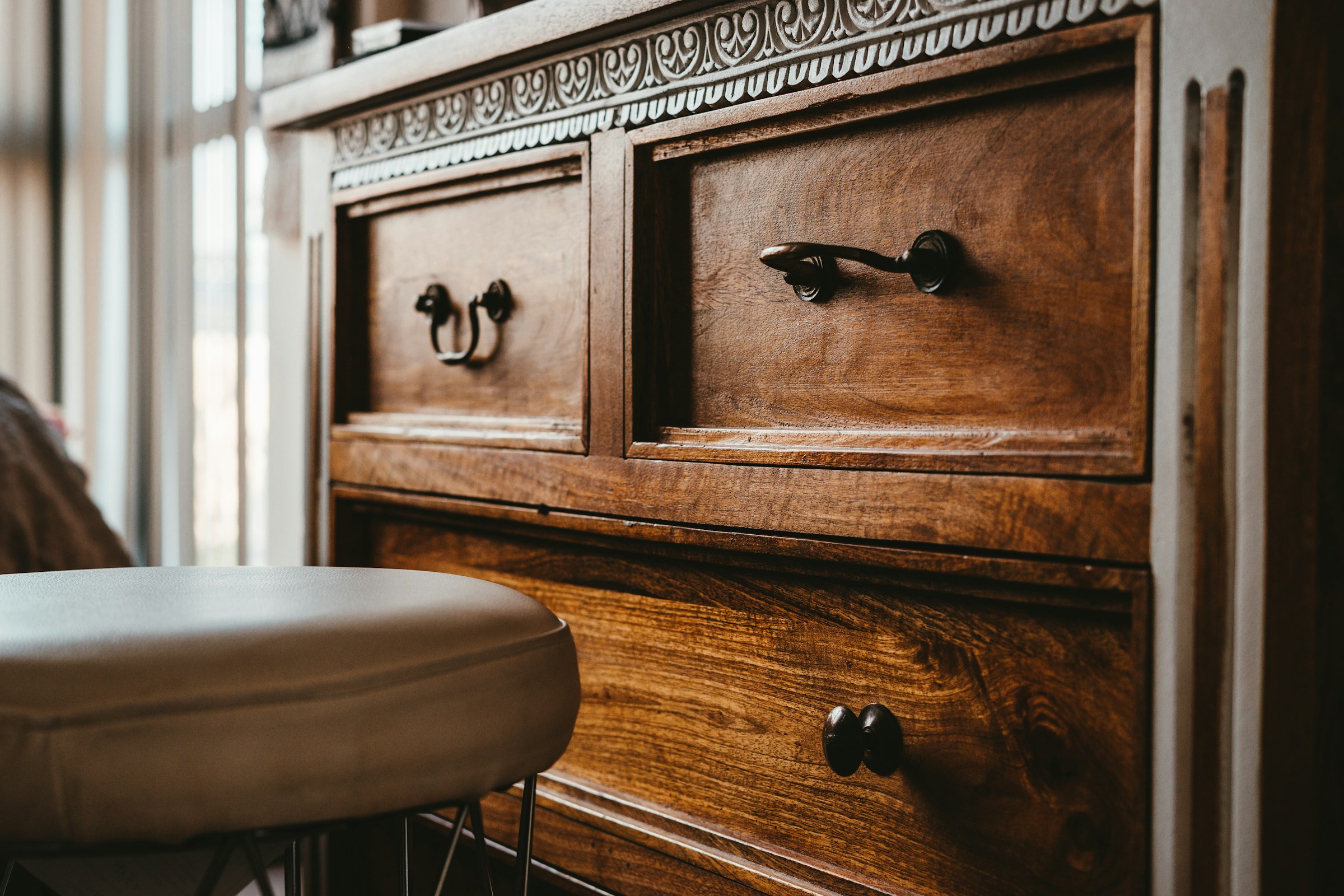
Distinguishing genuine antique furniture from reproductions requires examining construction methods, materials, and wear patterns. Knowing what to look for saves you from overpaying for modern copies at flea markets and antique shops.
Dovetail Joints
Check drawer construction first. Hand-cut dovetails featuring irregular spacing and fewer pins indicate pre-1890 manufacture. Machine-cut variants appeared after 1890 and display uniform, tightly-spaced pins. Pieces lacking dovetails altogether likely date from post-1950 production.
Wood Selection
Antique furniture employs different woods for visible versus hidden surfaces. Primary woods like oak, walnut, and mahogany varied by era. Secondary woods, typically poplar or pine, appear in drawer bottoms and backs. Modern reproductions often use uniform wood throughout or substitute particleboard for structural components.
Wear Patterns
Genuine antiques display wear consistent with actual use. Wear appears where hands actually touched: drawer pulls, arm rests, seat edges. The bottom of chair legs show uneven wear from years on uneven floors. Reproductions frequently show artificially aged surfaces in inappropriate locations or uniform distressing that lacks the randomness of genuine use.
Hardware and Patina
Original hardware develops distinct patina over decades. Look for slight oxidation around screw holes, wear marks on pulls where fingers grip, and variations in metal color. Reproduction pieces often feature hardware that appears uniformly aged or deliberately distressed.
Screws offer another clue. Hand-filed screws with off-center slots predate 1850. Machine-made screws with pointed tips appeared after 1850. Phillips head screws indicate post-1930 manufacture.
Pricing Reality
Pricing reflects authenticity in Sacramento markets. Authentic 1880s oak dressers command $400 to $800 at local venues, while 1980s reproductions sell for $75 to $150. Learning to spot the difference protects your investment and builds confidence when shopping.
Quick Checklist
- Pull out drawers and examine dovetail construction
- Check secondary wood on hidden surfaces
- Look for wear patterns consistent with age and use
- Examine hardware patina and screw types
- Inspect the back and underside for construction clues
- Compare the piece to dated reference photos when possible
You Might Also Like